

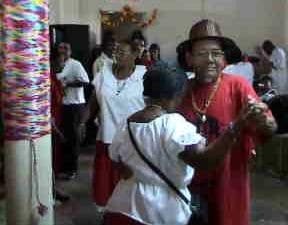
Parang is Dance
In parang, there are two primary dance styles: a slow castillian waltz, and the quicker duple-feel gavilan style. The castillian waltz always brings the older parranderos to the dance floor, the remnants of a rural Trinidadian cocoa-estate community. The couple in this first photo are dancing the castillian, a waltz-style dance in a slow, stately pace. In this dance, the couple must maintain a “respectable” distance apart from each other, as in the European ballroom waltz. The couple is almost always male-female in this dance, and it is rare to see someone dancing solo.
In the quicker parang style, the couple will usually dance much closer, and thus more sexual tension is exhibited. It is more common to see solo dancers in this style (as illustrated above), since it always draws many more participants onto the dancefloor. The quicker style is related to a larger number of song types, including the aguinaldo, gavilan, guarapo, joropo, manzanares, and gaita, since each of these songs are based upon a 6/8 rhythmic feel.
In the contemporary settings of nationalized competitions, “latin” songs bring a greater variety to the dance, adding Dominican merengue and Puerto Rican salsa to the repertoire. These song styles are more popular with a younger group of participants, primarily young middle-class and also the expat/visiting Venezuelan youth. As one can guess, these dance styles have also influenced the quantity and quality of crowd that follows the competition fetes, in the popularization of this formerly rural, non-competitive tradition. Additionally, the more intricate dance-steps of salsa have inspired Trinidadians to attend Latin dance classes and, for the afficionados, Latin music nights at nightclubs in urban areas (i.e., Port of Spain, San Fernando).
Parang is Food
The foods typically found at a parang event are also traditional Christmas fare to most Trinidadians: pastelles (steamed chicken or pork-filled cornmeal patties), empanadas(fried version of pastelle), paime (sweet pastelle), sorrel (a spicy cider), ginger beer, rum, “babash” (home-brewed alcohol), wild meat (i.e., wild game); and at more intimate family gatherings, roast pork, pelau (chicken and rice), and sometimes cassava bread (an Amerindian tradition).
Source: Written by Amelia K. Ingram, Wesleyan University, 2002.